
Gaza's Women Face a Winter Catastrophe: One Million Displaced and Calls for International Intervention
The Ministry of Women's Affairs warns of worsening suffering among women in Gaza amid the cold snap, reveals figures on displacement, widows and female-headed households, and calls for urgent international intervention to provide shelter.
Gaza – FiMED
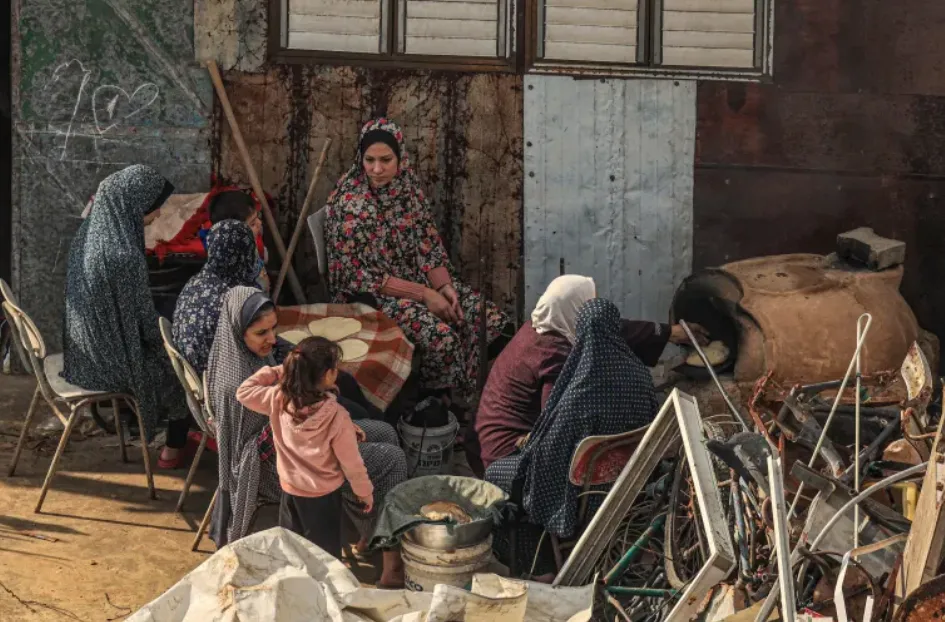
The Ministry of Women's Affairs in the Gaza Strip has warned of the worsening humanitarian catastrophe facing displaced women and girls amid the fallout of the cold snap, which has flooded and damaged displacement camps and shelters. It stressed that the current conditions have gone beyond the limits of an emergency crisis and are now threatening the lives of women and their families, as tents lack the minimum protection from rain and cold.
In an urgent press statement, the ministry said women and children are at the forefront of those most affected by the cold snap, noting that about one million women and girls have been displaced from their homes, while 258,927 displaced families are spread across 2,090 shelters.
It explained that about 950,000 displaced people are living in sites exposed to flood risks, including more than 400,000 in areas classified as high-risk, while some 867,000 people live in dilapidated tents that offer no adequate protection from rain and cold, with about 162,000 tents in need of immediate replacement.
The ministry added that more than 1,500 distress calls were recorded with the Civil Defence in the first hours of the cold snap as a result of damage to tents and shelters, reflecting the scale of the risks facing thousands of displaced families, especially in low-lying areas and sites near flood channels and beaches.
Widows and female breadwinners bear the burden of displacement
The suffering of women is compounded by the growing social and economic burdens left by the war. Ministry data indicate that the number of widows in the Gaza Strip has reached 64,413, including 28,224 who were widowed during the war, while the number of households headed by women has risen to 86,290, bearing responsibility for securing food, shelter and care under extremely difficult humanitarian conditions.
About 702,000 women and girls also suffer from acute food insecurity, while the number of women and girls killed or injured has reached about 50,000, including 11,700 injured women living with permanent disabilities, according to the figures cited by the ministry.
The statement affirmed that displaced women, particularly widows, breadwinners and the injured, face mounting difficulties in providing dry and safe shelter for their children, alongside an acute shortage of blankets, winter clothing, dry bedding, food, infant formula and medicine.
It noted that the lack of privacy and safe sanitation facilities in shelters increases the risks facing women and girls, at a time when mothers and breadwinners are left to confront the cold and floods alone after losing the provider and the collapse of sources of income.
Calls for urgent international intervention
In the face of these conditions, the Ministry of Women's Affairs appealed to the United Nations and its specialised agencies, foremost among them the United Nations Relief and Works Agency for Palestine Refugees (UNRWA), UN Women, the World Health Organization and the United Nations Children's Fund (UNICEF), as well as the International Committee of the Red Cross, the League of Arab States, the Organisation of Islamic Cooperation and all humanitarian institutions, to intervene immediately to provide the basic needs of women and displaced families.
The ministry demanded that rain-resistant tents, insulating tarpaulins, blankets and winter clothing be allowed in, giving priority to widows, female breadwinners, the injured, pregnant women, the elderly and persons with disabilities.
It also called for tents pitched in low-lying areas, flood channels and on beaches to be moved to safe sites equipped with drainage networks, and for work to provide temporary shelter units that preserve the dignity of the displaced and serve as an alternative to dilapidated tents.
It stressed the need to provide food aid, medicine and hygiene and dignity supplies for women and girls, and to strengthen health care, protection and psychosocial support services inside shelters.
The ministry warned that continued delay in the humanitarian response will lead to a worsening of the health and humanitarian risks facing women and children, and called on the international community and the relevant institutions to shoulder their responsibilities in protecting civilians and ensuring that humanitarian aid reaches them urgently and regularly.