Palestinians abroad step up opposition to National Council appointments: No to appointment, no to exclusion
The conference sent a clear message against what participants saw as a circumvention of Palestinians' right to choose their representatives, stressing that the National Council cannot draw its legitimacy from appointment
Istanbul – FiMED
The Popular Conference of Palestinians Abroad on Friday stepped up its rejection of the mechanism for appointing members of the Palestinian National Council, calling for free and direct elections that include Palestinians at home and in the diaspora, and announcing its rejection of any arrangements based on appointment, exclusion or the imposition of prior political conditions on representation.
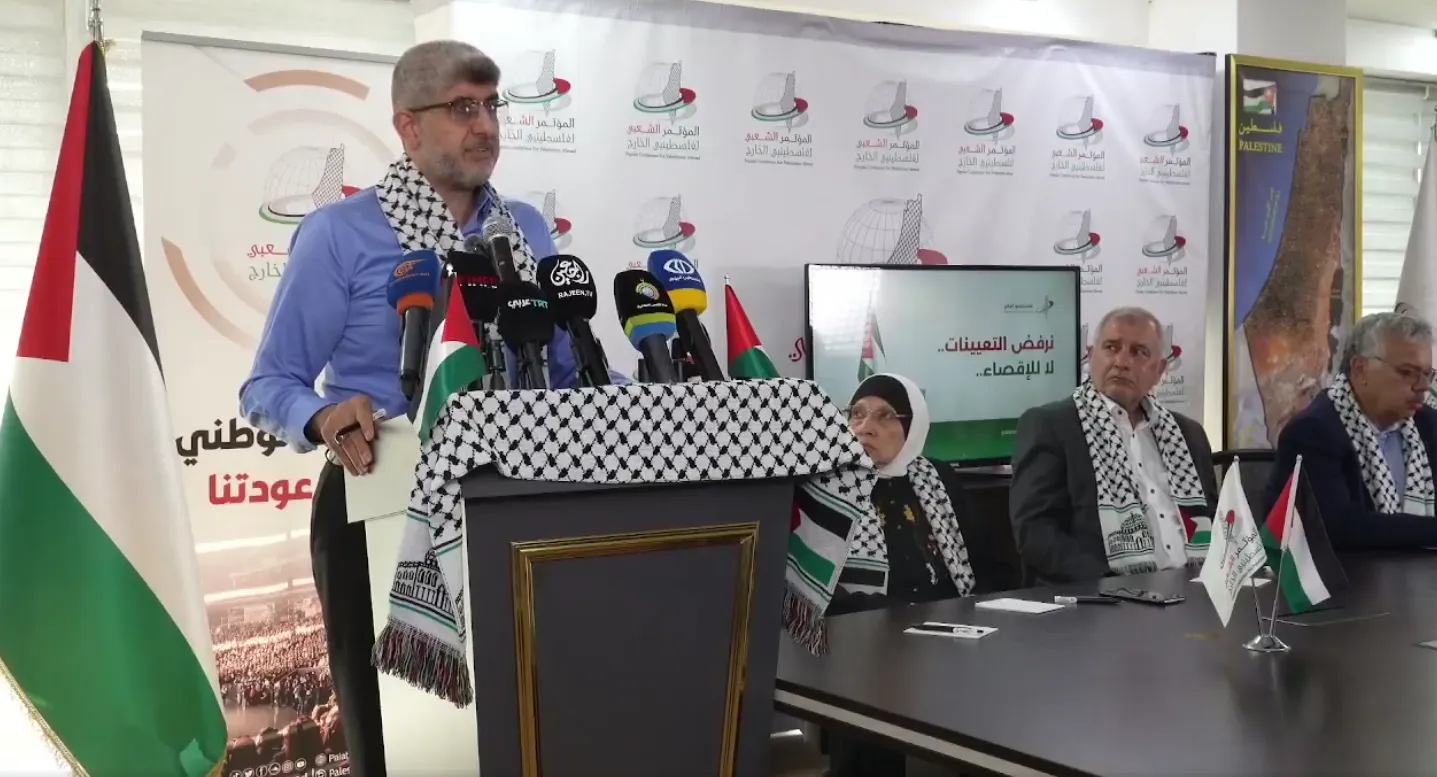
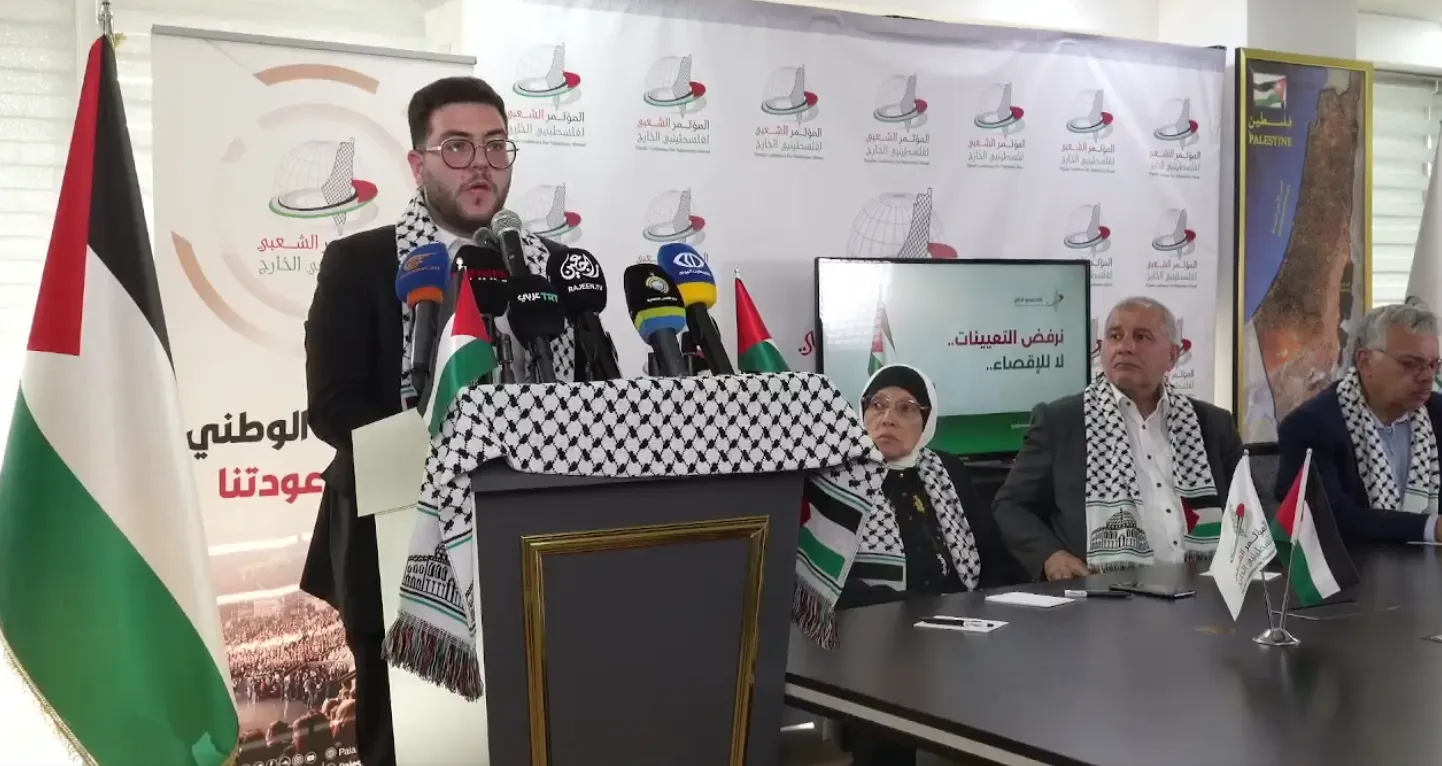
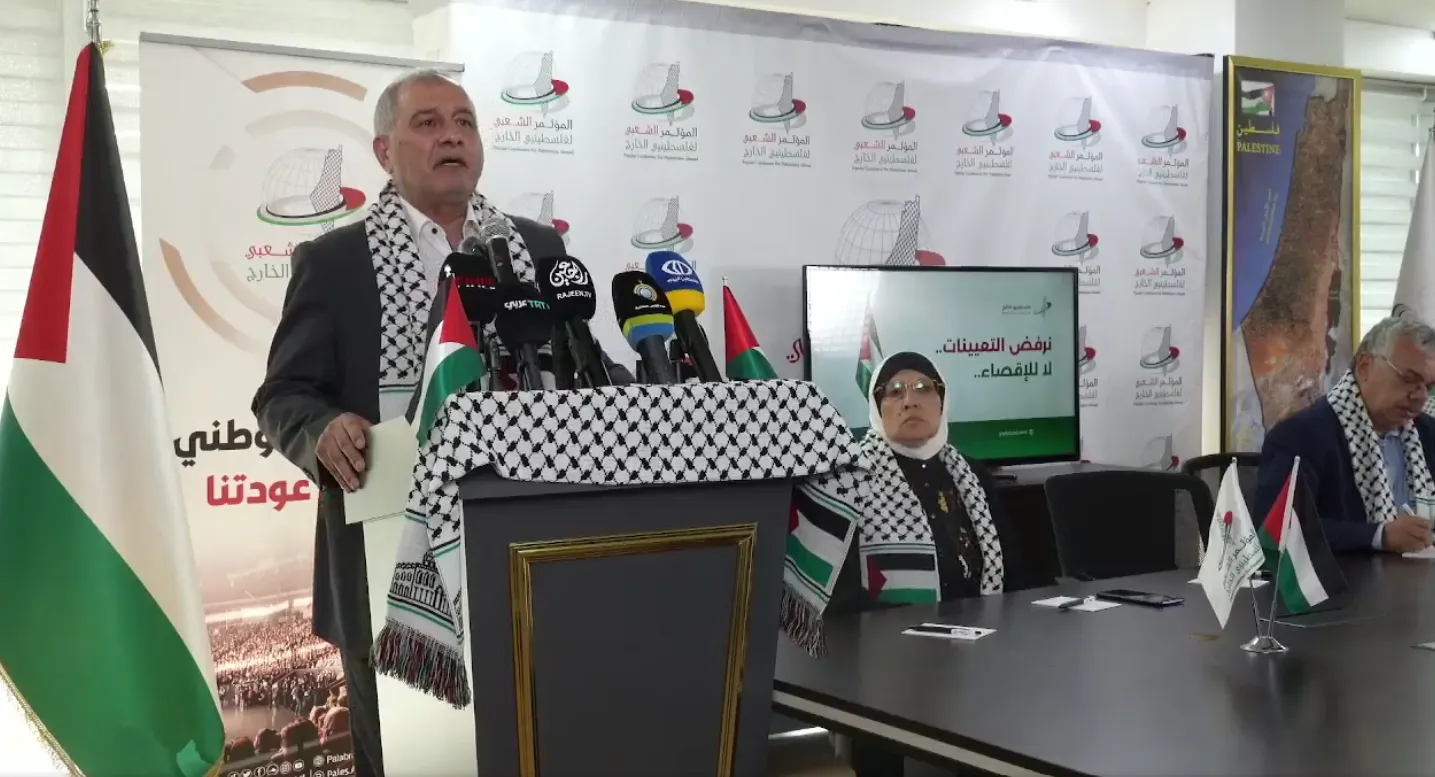
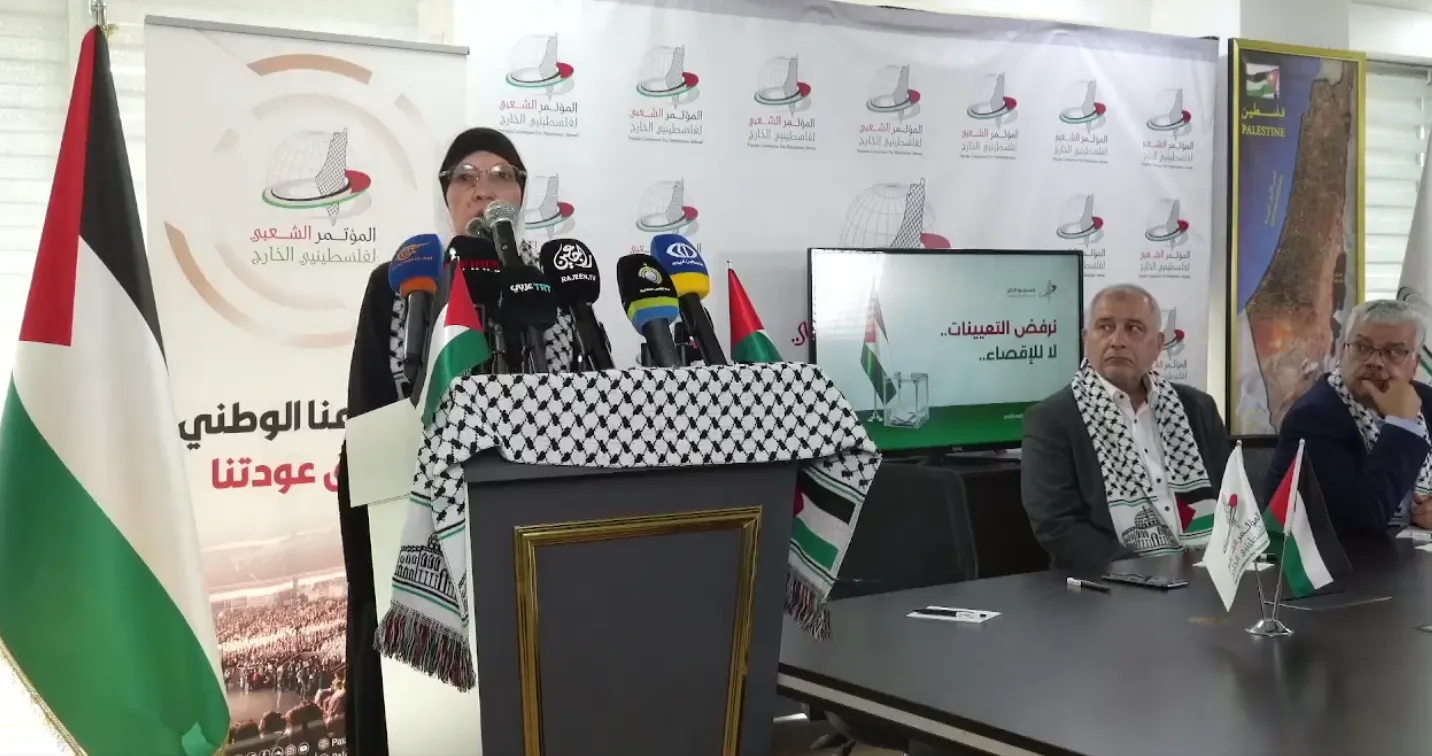
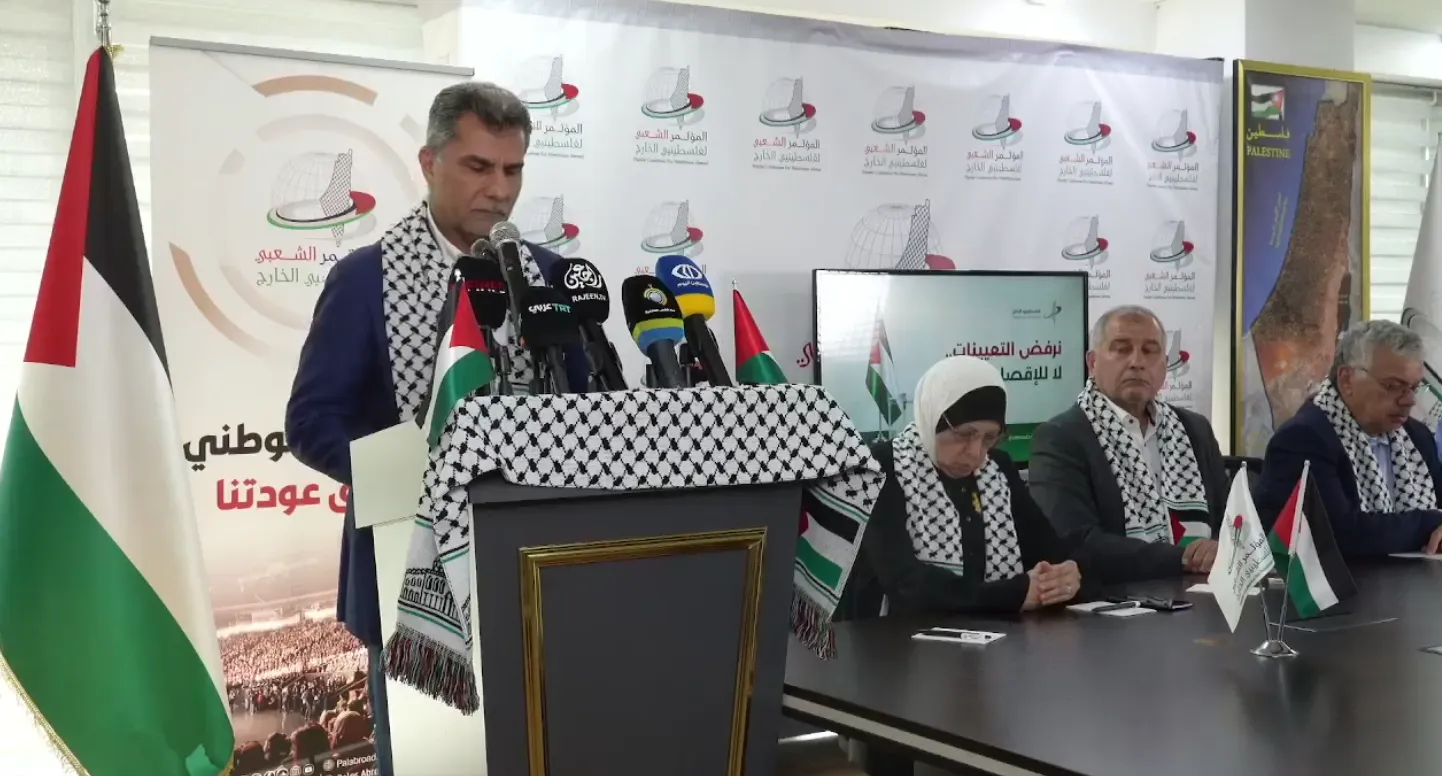
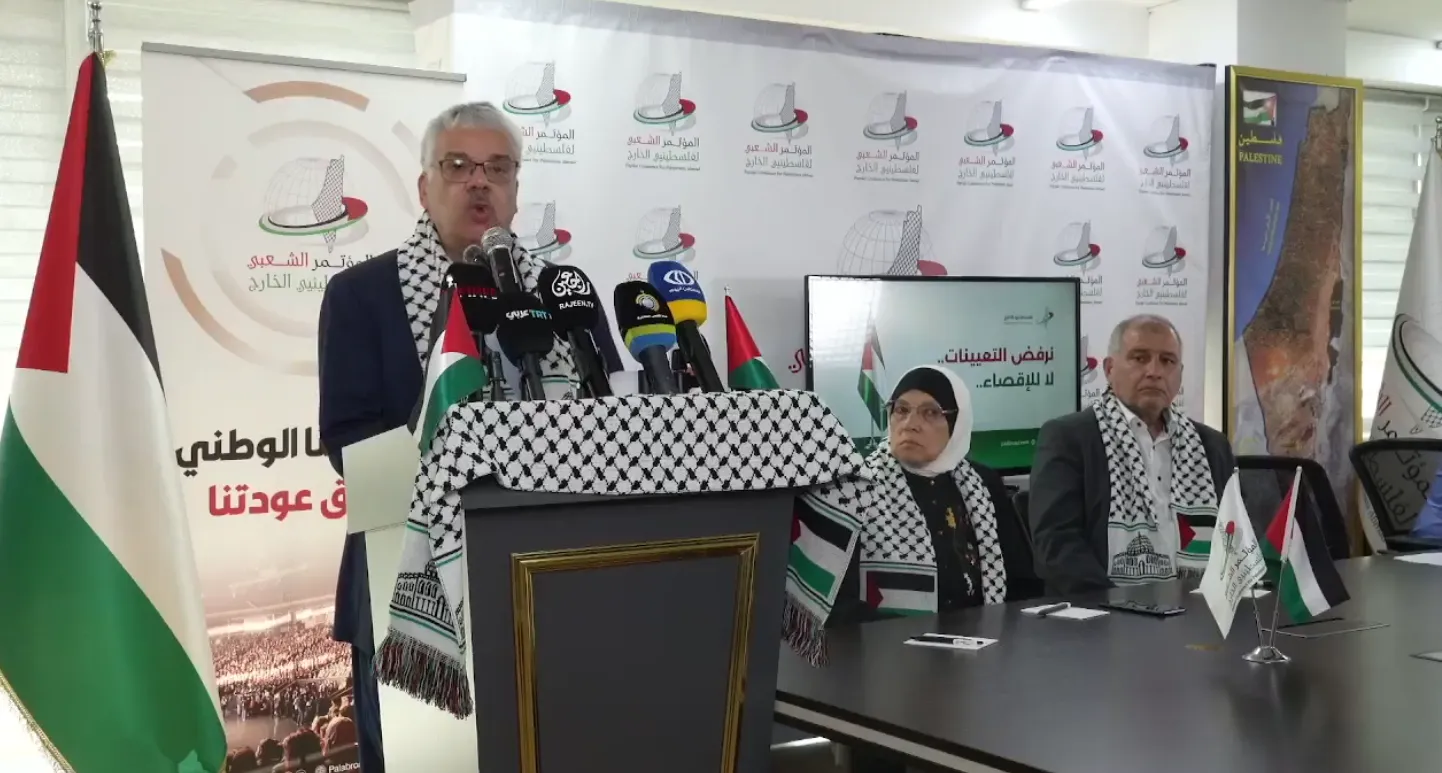
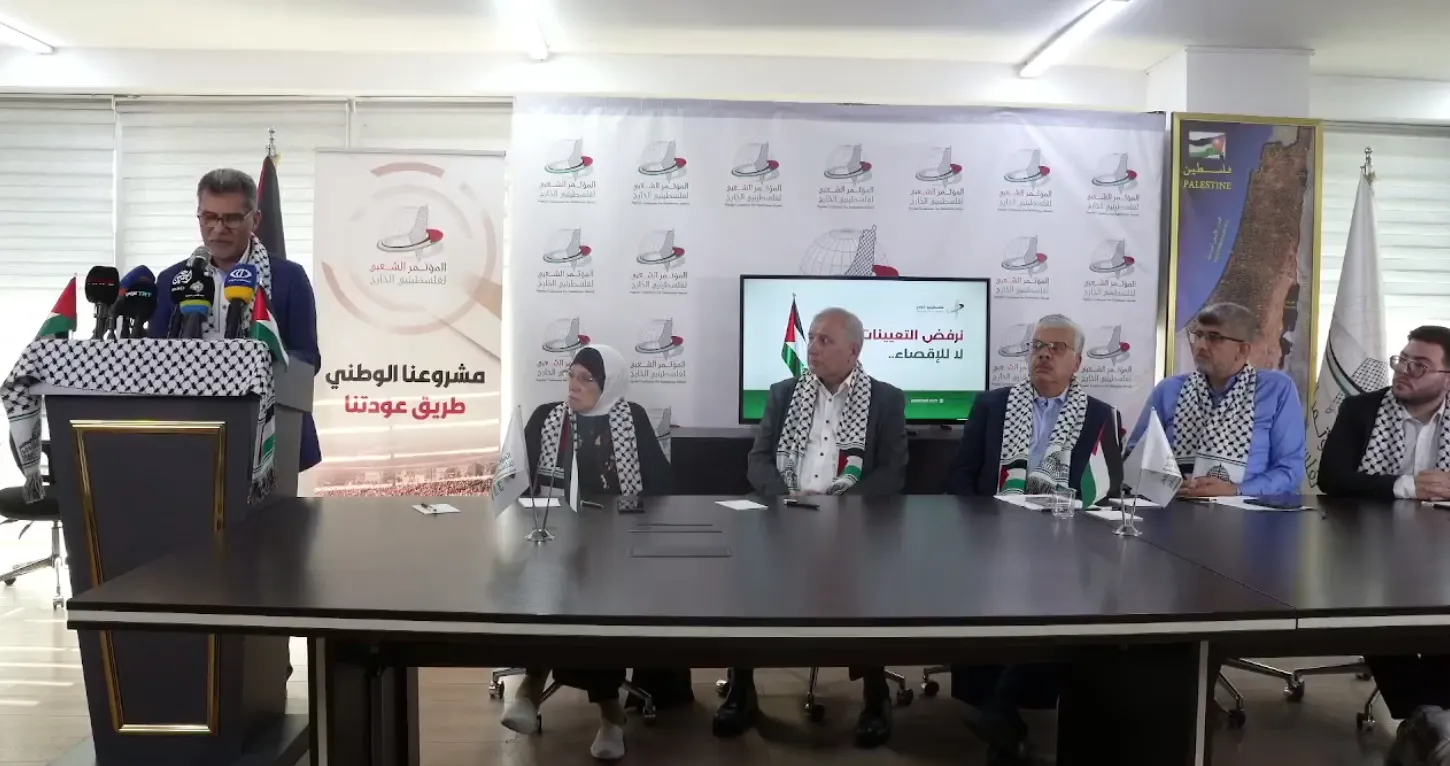
The position was set out at a press conference held in Istanbul under the title "We reject appointments.. No to exclusion", attended by Palestinian institutions, bodies and figures from abroad, among them the Conference of Palestinians in Europe, the Union of Palestinian Communities in America and the National Conference of Palestinian Youth, alongside legal experts and national figures.
The conference delivered a clear political message against what participants regarded as a circumvention of Palestinians' right to choose their representatives, stressing that the National Council, as the umbrella framework of the Palestinian people, cannot draw its legitimacy from appointment or factional deals, but only from the will of the voters.
Participants stressed that Palestinians abroad are an integral part of the Palestinian people, and that excluding them from choosing their representatives entrenches the crisis of representation and legitimacy rather than resolving it.
No to appointment.. The decision belongs to the people
The representative of the Popular Conference of Palestinians Abroad said that reconstituting the National Council is an opportunity to reunite the Palestinian people, but it must be done "on democratic foundations and through a clear national consensus", leading to genuine elections in which Palestinians at home and abroad take part.
He stressed that "the Palestinian people, wherever they are, are the source of legitimacy", and that free and fair elections are the democratic path to renewing that legitimacy.
He added that Palestinians abroad are "an integral part of the Palestinian people", and that their representation must not be reduced or subjected to exceptional mechanisms that exclude them from the electoral process, affirming the rejection of appointment as a substitute for direct democratic voting.
Conference of Palestinians in Europe: "Appointing the people's representatives is a national crime"
In the speech of the representative of the Conference of Palestinians in Europe, Majed Al-Zeer, a sharper stance on the appointment mechanism emerged. He stressed that the Palestinians in Europe, who number close to one million, are an inseparable part of the one Palestinian people.
He said Palestinians wherever they live need a central leadership "that takes every Palestinian into account", arguing that the Palestine Liberation Organization should fulfil this role through an elected leadership that expresses the will of the people.
In his most striking remark, he said that "appointing those who represent the Palestinian people, without the people, from one end of the world to the other, having a say in choosing their representatives, is a national crime par excellence".
He summed up the participants' position by saying: "No to appointment, no to exclusion, no to sidelining, yes to the free and declared will of the Palestinian people to elect those who speak for them."
A personal testimony: "I have never voted, though I am seventy"
In a moving intervention, Ilham Al-Hakim, a member of the General Union of Palestinian Journalists, asked: "How can I, as a mother, teach my son freedom and democracy, when I, at seventy, have still never been able to express my opinion in an election concerning our people?" She stressed that Palestinians at home and abroad are one people who must stand "under one flag and one banner", and called for real commitment to the decision to hold elections once it has been taken.
From America: "Palestine belongs to no faction and no authority"
In a recorded speech, Simaan Khoury, representative of the Union of Palestinian Communities in America, stressed that "Palestine belongs to no faction and no authority", and that the national decision must be the right of all Palestinians wherever they are.
He said diaspora Palestinians "have not left their cause nor abandoned it", affirming their right to take part in choosing their representatives in the Palestinian National Council.
Khoury rejected appointments imposed by the Authority or through embassies, saying they "do not resolve the crisis of representation but deepen the crisis of legitimacy and division".
He stressed that the National Council "must be a home for all Palestinians", not a council built on appointments, favouritism or exclusion, and called for genuine elections that include the Palestinian people in the homeland and the diaspora.
Palestinian youth: Elections are the gateway to rebuilding the political system
For his part, the representative of the National Conference of Palestinian Youth said that achieving Palestinian national aspirations requires "a clear and courageous vision based on partnership and unity", calling for democratic elections to be adopted and the principle of appointment rejected.
He called for guaranteeing the right to stand and vote for all national forces, currents and figures, and for rejecting any prior political conditions on participation, stressing the need to reform the PLO and strengthen the presence of young people and women in national institutions and decision-making positions.
He said elections could be an opportunity to rebuild trust among Palestinians on the basis of partnership, pluralism and respect for the popular will.
Judge Muin Naim: Elections are a "rescue project" for the national decision
For his part, Palestinian judge Muin Naim placed the issue of elections in a broader framework, saying the discussion should not be limited to "a ballot box or the distribution of posts and seats", but should be seen as "a rescue project for a people facing genocide and displacement" and a reclaiming of the national decision after years of division and monopoly.
He stressed that the elections needed must be "free, fair and inclusive", allowing Palestinians in Gaza, the West Bank, Jerusalem and the diaspora to choose a new leadership that draws its legitimacy from the will of the people, "not from appointment, nor from quota-sharing, nor from a condition to adopt a particular political orientation".
He emphasised that the coming leadership must represent the full range of Palestinian political, intellectual and social currents, away from "the biased choice of a narrow group that does not represent this people".
Rejection of electoral colleges and political conditions
The conference stressed its rejection of electoral colleges as a substitute for direct voting, saying the legitimacy of representation cannot derive from individuals who choose representatives on behalf of those who hold the right.
Participants also rejected redistributing National Council seats according to factional deals or imposing prior political conditions on candidates, calling for the participation of all national forces, bodies and figures.
They also called for genuine representation of Palestinian associations, institutions and communities abroad, and for opening the way for young people and women to take up positions of representation and decision-making.
Final statement: 13 points and a threat not to recognise the results
In a notable escalation, the conference's final statement declared the results of National Council elections illegitimate should there be insistence on holding them on the basis of appointments, exclusion and prior political conditions.
Participants said they "will not recognise them" and will work within legal frameworks to challenge and overturn them, holding that any representation not based on the will of the voters remains "representation lacking in legitimacy".
At the close of its proceedings, the conference called for rebuilding the National Council and the Palestine Liberation Organization on the basis of political partnership, genuine representation and direct election, stressing that Palestinians abroad are not mere names added to membership lists, but rights-holders entitled to choose their representatives and take part in shaping the national decision.
The conference closed with a joint statement from the participating institutions containing 13 points, most notably:
§ Categorical rejection of any presidential decree appointing members of the National Council, as an overriding of the will of millions of Palestinians.
§ Affirmation that the National Council is an umbrella framework whose membership must not hinge on the decision of a single party.
§ A demand to rebuild the Council on the basis of election and fair representation of those at home and abroad together.
§ Rejection of redistributing seats according to prior factional deals.
§ Affirmation of the full right of Palestinians abroad to participate, and rejection of subjecting them to "exceptional mechanisms" that exclude them.
§ Rejection of adopting "electoral colleges" as a substitute for the direct ballot box.
§ The need to represent Palestinian associations and institutions in all diaspora countries.
§ Opening the way for young people and women to take up positions of representation and decision-making.
§ Affirmation that reforming the PLO can only come through the factions agreeing on the people's right to choose their leadership exclusively through the ballot box.
§ Non-recognition of any results of National Council elections held through appointment, exclusion or prior political conditions, and a pledge to challenge them legally.
§ A call to revive Palestinian trade unions, professional associations and popular unions along democratic lines.
The statement concluded by affirming the Palestinian people's right to real participation in shaping the national decision by rebuilding the National Council and the PLO "on the basis of political partnership", and by holding fast to the constants of liberation, the right of return and the establishment of an independent Palestinian state with Jerusalem as its capital, invoking mercy on the martyrs and wishing recovery for the wounded and freedom for the Palestinian prisoners.