
Ali Baraka: We reject "appointment" to the National Council and insist on electing representatives abroad
Factional electoral colleges do not represent Palestinians as a whole, and rebuilding the PLO must rest on partnership and the will of the people
FiMED – Follow-up
Hamas has rejected what it described as the continued approach of "appointment, exclusion and unilateralism" in reshaping the Palestinian National Council, affirming its commitment to the right of Palestinians abroad to elect their representatives freely and directly.
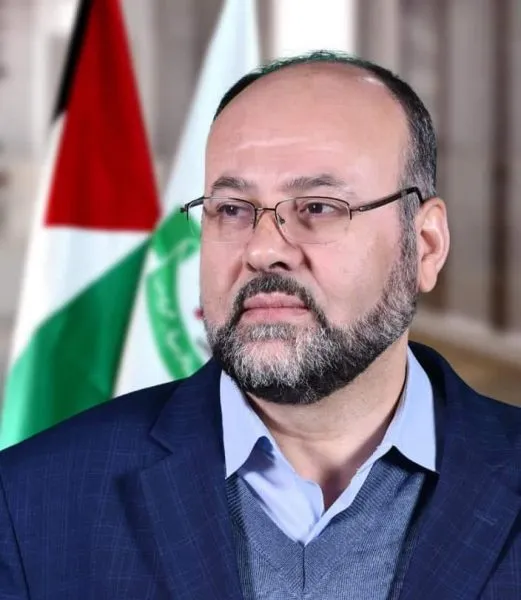
Ali Baraka, head of Hamas's National Relations Department abroad, said on Thursday that one of the most basic national and democratic rights of Palestinians in the diaspora is to choose their representatives on the National Council through free and direct elections.
He added that, in the movement's view, the impossibility of holding elections in some countries does not justify resorting to appointment or unilaterally imposing factional representation, arguing that the alternative should be comprehensive national consensus.
Rejecting factional electoral colleges
Baraka criticised the formation of electoral colleges that he described as factional and not representative of Palestinians as a whole in the host countries, warning that monopolising the reshaping of the PLO's institutions at this stage does not serve national unity.
He said continuing this approach would deepen division and fragmentation at a time when Palestinians, in his words, need to unite their efforts to confront the occupation, settlement, Judaisation, displacement and the ongoing war in Gaza, the West Bank and Jerusalem.
Depriving refugees undermines their rights
The Hamas official stressed that depriving Palestinian refugees abroad of the right to choose their representatives amounts, in his words, to an infringement of their national and democratic rights.
Baraka linked this to the history of Palestinian displacement since the 1948 Nakba, affirming that the right to return to the homes and properties from which Palestinians were displaced is "a fixed right that does not lapse with time".
Invoking the Cairo and Beijing understandings
Baraka called on Palestinian factions, forces and national figures to reject appointment, exclusion, unilateralism and the monopolisation of national decision-making, and to adhere to the national understandings that began with the Cairo dialogue on 17 March 2005 and culminated in the Beijing Declaration on 23 July 2024.
He said these understandings affirmed the need to rebuild and reactivate the Palestine Liberation Organization on democratic, participatory and national foundations.
The National Council as an inclusive framework
Baraka concluded by stressing that the Palestinian National Council must be an inclusive national framework for Palestinians at home and in the diaspora, not an institution based on exclusion and appointment.
He stressed that, in Hamas's view, rebuilding the PLO can only be achieved through national partnership and respect for the will of the Palestinian people and their right to choose their representatives freely.