
Palestinians in Belgium reject "appointments" to the National Council and demand elected diaspora representatives
The community said it is following with concern the ongoing procedures to reconstitute the National Council, arguing that appointments are being made without the participation of Palestinians living in Europe.
FiMED – Follow-up
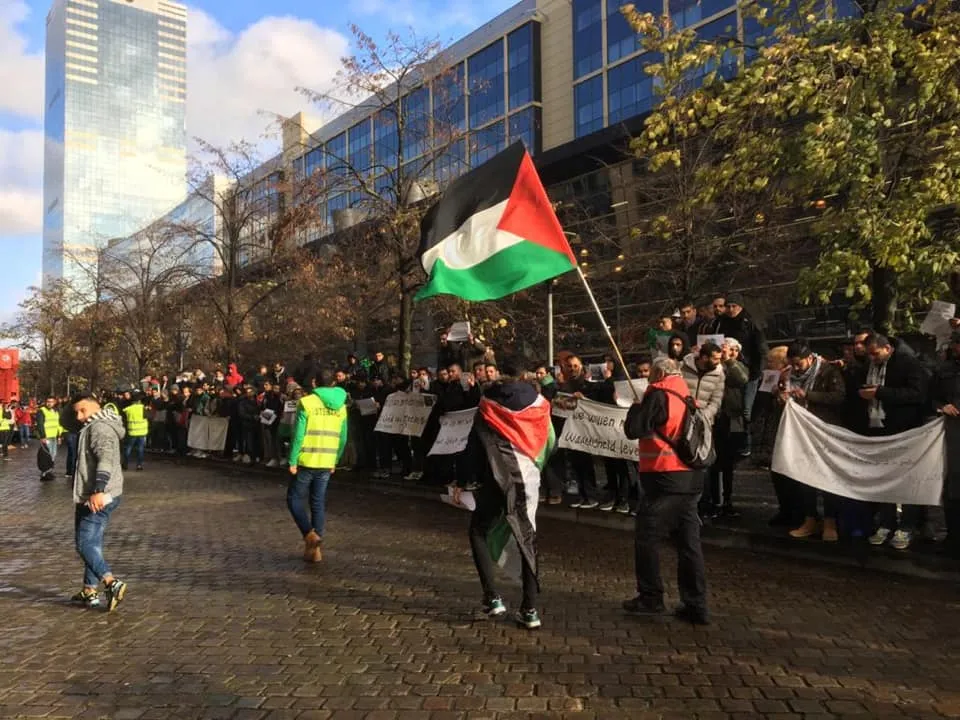
The Palestinian community in Belgium announced its rejection of what it described as a policy of "exclusion, appointment and unilateralism" in the procedures to reconstitute the Palestinian National Council, demanding that Palestinians in diaspora countries be enabled to choose their representatives through free, democratic and transparent elections.
In a statement issued on Sunday, the community said it is following with concern the ongoing procedures to reconstitute the National Council, arguing that appointments and representation arrangements are being made without the participation of hundreds of thousands of Palestinians living in Europe.
The signatories affirmed that the Palestinian National Council is the inclusive national institution for Palestinians at home and in the diaspora, stressing that it should not be subject to any individual, faction or authority, but should rest on broader Palestinian representation.
Rejection of "electoral colleges"
The community rejected the policy of appointment and exclusion, as well as the formation of "electoral colleges or bodies" in a manner it described as undemocratic, arguing that this deprives broad sections of Palestinians of the right to take part in choosing their representatives.
It demanded that the formation of the next Council be based on national partnership and include the various Palestinian forces, groups and components, ensuring broader representation for communities, institutions and independent figures.
These demands come as procedures to select representatives of Palestinians abroad continue, amid Palestinian debate over the "electoral college" mechanism used in some diaspora arenas. Those on the other side of these criticisms have defended the mechanism as an electoral route permitted by legal amendments in arenas where direct balloting is impossible.
Objections beyond Belgium
The position of the Palestinian community in Belgium is not isolated; it was preceded by positions from Palestinian forces and factions, as well as the Union of Palestinian Communities and Institutions in Europe and the Palestinian Federation of Latin America "OPAL", which criticised the current track and called for broader participation in reconstituting the National Council.
In a joint statement, the two federations affirmed that Palestinians in the diaspora are an integral component of the Palestinian people, and that their representation should not be limited to quotas or appointments lacking a mandate from the communities and institutions concerned.
"National representation" at the heart of the dispute
The current dispute centres on a fundamental question: how do Palestinians in the diaspora choose their representatives on the National Council?
While some Palestinian parties are pushing to complete the representation process through the electoral mechanisms available in each arena, others demand broader and direct elections, arguing that any mechanism without broad Palestinian participation or consensus could deepen the crisis of representation.
In this context, the Palestinian community in Belgium reaffirmed its insistence that the renewal of the National Council be based on popular participation, pluralism and transparency, reflecting the components of the Palestinian people at home and in the diaspora.
A call to rebuild institutions
The statement stressed that the current stage requires, in the signatories' view, unifying Palestinian ranks and rebuilding national institutions on the basis of partnership and popular participation, rather than entrenching division or confining representation to arrangements lacking broad participation.
This comes amid a growing Palestinian debate over reforming the Palestine Liberation Organization and renewing its institutions, coinciding with the procedures to reconstitute the National Council, and amid calls from various parties to broaden the base of participation and involve communities, young people, women, independents and political and social forces.