"Camp Ambassadors": artificial intelligence documents Palestinian memory
A training course in Sidon equips young Palestinians to use artificial intelligence and content creation to document the memory of the camps, refugees' stories and the right of return.
FiMED – Follow-up
A new youth initiative has begun in the city of Sidon and its camps in southern Lebanon to harness artificial intelligence tools for producing Palestinian content and documenting the memory of the camps and refugees' stories, as part of the "Camp Ambassadors" programme.
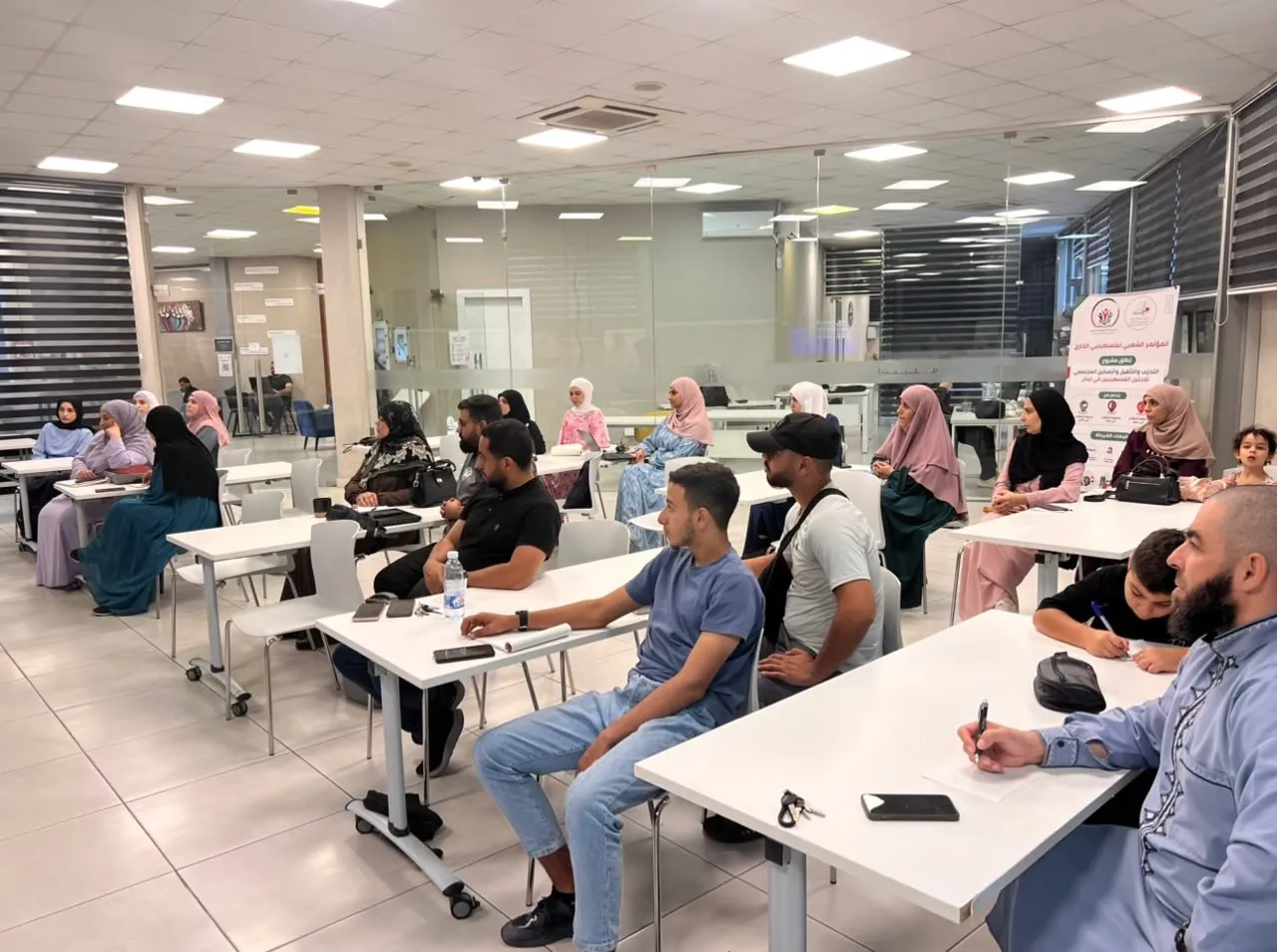
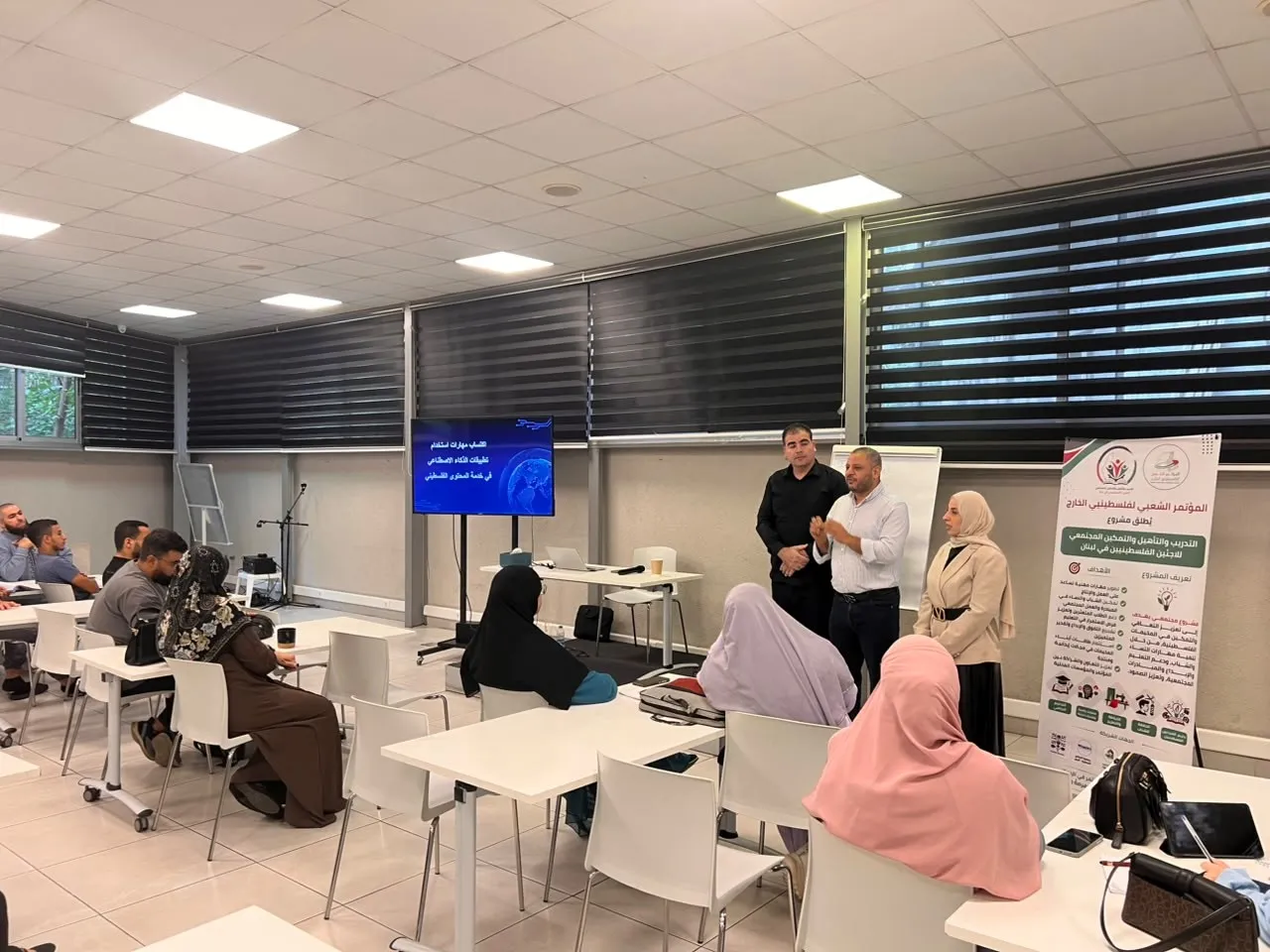
The Thabet Organisation for the Right of Return, with support from the Popular Conference for Palestinians Abroad – Lebanon Coordination Office, organised a training course entitled "Acquiring skills in using artificial intelligence applications to serve Palestinian content", attended by young Palestinian men and women aged 18 and over.
The training, held at the "Ishbilia" hall in Sidon, focused on introducing participants to artificial intelligence tools and applications and how to use them to prepare, develop and publish Palestinian digital content. The course was given by Palestinian trainer and innovator Amer Darwish, who presented a range of tools and applications that can be used to produce digital content, including preparing media materials and developing new forms of Palestinian storytelling.
"Camp Ambassadors": from training to documentation
Sami Hammoud, director of the Thabet Organisation for the Right of Return, told the Palestinian Refugees Portal that the initiative aims to enable young Palestinians to be "ambassadors for their camps" by documenting their identity and memory and the issues facing refugees, foremost among them the right of return.
Hammoud explained that the programme sees artificial intelligence and content creation as modern tools young people can use to produce Palestinian material and bring it to a wider audience in the digital space.
The initiative comes at a time when digital content is becoming increasingly important for preserving local narratives and passing human experiences from one generation to the next, especially in communities with an extensive oral and social archive such as the Palestinian camps.
Sidon as the starting point
The programme's organisers chose Sidon and its Palestinian camps as the initiative's starting point because of the Palestinian presence in the area, the memory and experiences of displacement the camps hold, and the presence of young talent that can be trained in digital media tools.
Hammoud revealed that the organisers hope to expand the programme to the other Palestinian camps and communities in Lebanon, so that every camp has a group of young people able to document its memory, its identity and its residents' stories.
Films, stories and interviews
The programme is not limited to theoretical training: it seeks to produce diverse Palestinian content documenting the memory of the camps and refugees' stories through short films, interviews, stories and digital content.
The project also includes building a network of "Camp Ambassadors", continuing the training and carrying out projects related to artificial intelligence, documentation and content creation.
The organisers believe young Palestinians are a key link in passing on the memory of the camps, being closest to the stories and daily experiences of their residents, and that equipping them with modern digital tools can help turn this memory into material that reaches new generations and a wider audience.
Palestinian memory in the digital age
The idea of the "camp ambassador" goes beyond training in technical applications to connect documentation, identity and the digital space, by giving young people tools to help them turn the testimonies, stories, photos and memories circulating in the camps into digital content that can be preserved and published.
In this way, the initiative seeks to bring together local memory and modern digital technologies, in an effort to build Palestinian content through which the stories of the camps and the experiences of refugees reach new audiences, inside and outside Palestine.