
Iran Between the Specter of War and the Calculations of Netanyahu and Trump: Has Confrontation Grown Near?
Ibrahim Al-Madhoun offers a reading of the trajectory of escalation between the United States, Israel and Iran, examining the prospects of a new war breaking out and the political and regional factors that may limit it.
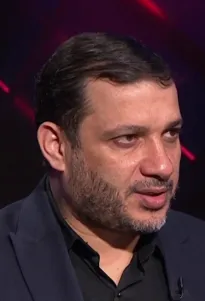
Ibrahim Al-Madhoun
I believe the results of the Israeli elections have made the option of directing a swift and direct military strike against Iran more complicated, and the results of the American elections have politically constrained President Donald Trump, which makes going to a new military confrontation in the near term difficult..
On the other hand, if Benjamin Netanyahu is tasked with forming the government, despite winning a minority in the elections, amid a majority leaning toward Gadi Eisenkot, that could be an indicator of an Israeli orientation toward taking a decision for a wide war, in partnership with the United States, and what may follow from that in the formation of an Israeli war council that Eisenkot would be forced to take part in..
Therefore, I believe we must watch the decision of Israeli President Isaac Herzog regarding the figure he will task with forming the government, whether Netanyahu or Eisenkot, which will become clear in the coming days..
Until this moment, I do not believe we are facing a comprehensive and wide war on Iran, despite the complexity of the scene. The failure of the United States and Israel to settle the Iranian file reflects the limits of their ability to impose military and political decisiveness, and may lead to a decline in their influence and standing in the region. Likewise, the lack of decisiveness in Lebanon may open the way for greater stability in countries such as Turkey and Syria, which does not serve the calculations of the Israeli occupation..
Among the most important brakes on war is the reluctance of the region's states, especially the Gulf states, to see a new confrontation erupt, alongside the rejection by wide segments of international public opinion of expanding the war. On the other hand, the most prominent factor that may push toward it is the position of Trump and Netanyahu, who have come up against a complex equation: they are unable to achieve decisiveness, and at the same time it is difficult for them to retreat and end the war without bearing a heavy political and economic cost, which may extend to their political future, and perhaps to trials and legal prosecutions..
Therefore, I believe the most important variable at the current stage is the decision of Israeli President Isaac Herzog regarding the tasking of the prime minister, especially since he has hinted that considerations of stability and interest may push him to choose a figure other than the one who currently holds the majority, namely Gadi Eisenkot..
I believe we are not close to the outbreak of a comprehensive war, and that matters have become complicated for American and Israeli decision-makers, which calls for studying different scenarios..
We should not overlook that we are facing a continuous draining of the region, especially since the Gulf states are the most affected by the blockade, the restrictions, and the disruption of navigation and trade, and the resulting mounting economic repercussions. Thus the region remains stifled and unsettled, living under the specter of war, in tandem with the rising American military presence in the Arab countries.