
Al-Madhoun to FiMED: Hamas does not prefer Netanyahu, and claims it seeks his victory are a misreading
Ibrahim Al-Madhoun to FiMED: Accusing Hamas of seeking Netanyahu's victory is a misreading of the movement's position on the occupation government's prime minister and his rivals.
Exclusive - FiMED
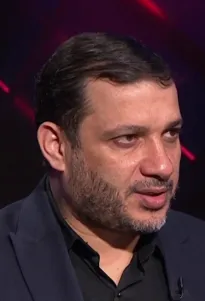
Writer and political analyst Ibrahim Al-Madhoun affirmed in an exclusive statement to the Palestinian Media Foundation – FiMED that talk of the Islamic Resistance Movement "Hamas" preferring the stay of the occupation government's prime minister, Benjamin Netanyahu, in power is "a lie and a fabrication," considering that this argument ignores the nature of the conflict and the movement's position on the Israeli political and military establishment.
Al-Madhoun's position comes in response to accusations circulated by some media platforms and political and analytical figures, alleging that Hamas prefers Netanyahu to remain in power or that his survival serves its interests, as opposed to the possibility of rivals including Gadi Eisenkot coming to power. These arguments rest on readings of the outcome of the confrontation and Israeli political calculations, but remain inferences about the movement's motives unless supported by direct evidence or documented positions.
Al-Madhoun said that Netanyahu, given the crimes and massacres he has committed against the Palestinian people, makes getting rid of him a unifying national interest, but he stressed at the same time that his rivals in the Israeli camp, including Eisenkot, do not necessarily represent a less aggressive option toward the Palestinians.
He added that Eisenkot's danger lies, in his assessment, in his greater ability to maneuver and to market himself diplomatically and in the media, noting that the overt extremism of the current Israeli government does not mean that replacing it will automatically lead to a change in Israeli policies or a halt to the war.
Al-Madhoun asked how ready Eisenkot would be, if he came to power, to take an actual decision to stop the war, considering that betting on a change of Israeli political faces is not enough on its own to bring about a shift in the nature of the colonial project based on occupation and hegemony.
He explained that his observation of Hamas's behavior over the years leads him to conclude that, in its position on the conflict, it does not distinguish between Netanyahu and other Israeli leaders, but views them as part of a political and military system hostile to the Palestinian people, and seeks to bring down Netanyahu and the rest of the symbols of this system.
Commenting on the arguments claiming that the movement might benefit from Netanyahu's continued rule, Al-Madhoun argued that it is illogical, in his assessment, to attribute to a movement that waged a military confrontation with his government and inflicted damage on his army a desire for his political survival.
Al-Madhoun concluded by saying that reading Hamas's position should be based on its behavior and declared positions, not on assumptions presented as facts, affirming that betting on the victory of Eisenkot or anyone else will not, in his view, change the nature of the Israeli project unless a real change occurs in policies and practices toward the Palestinian people.