
Israelising education in Jerusalem: Israel targets 45,000 Palestinian students
Israeli authorities have begun imposing the Israeli curriculum on more than 45,000 first- and seventh-grade students in schools run by the occupation's municipality.
Jerusalem – FiMED
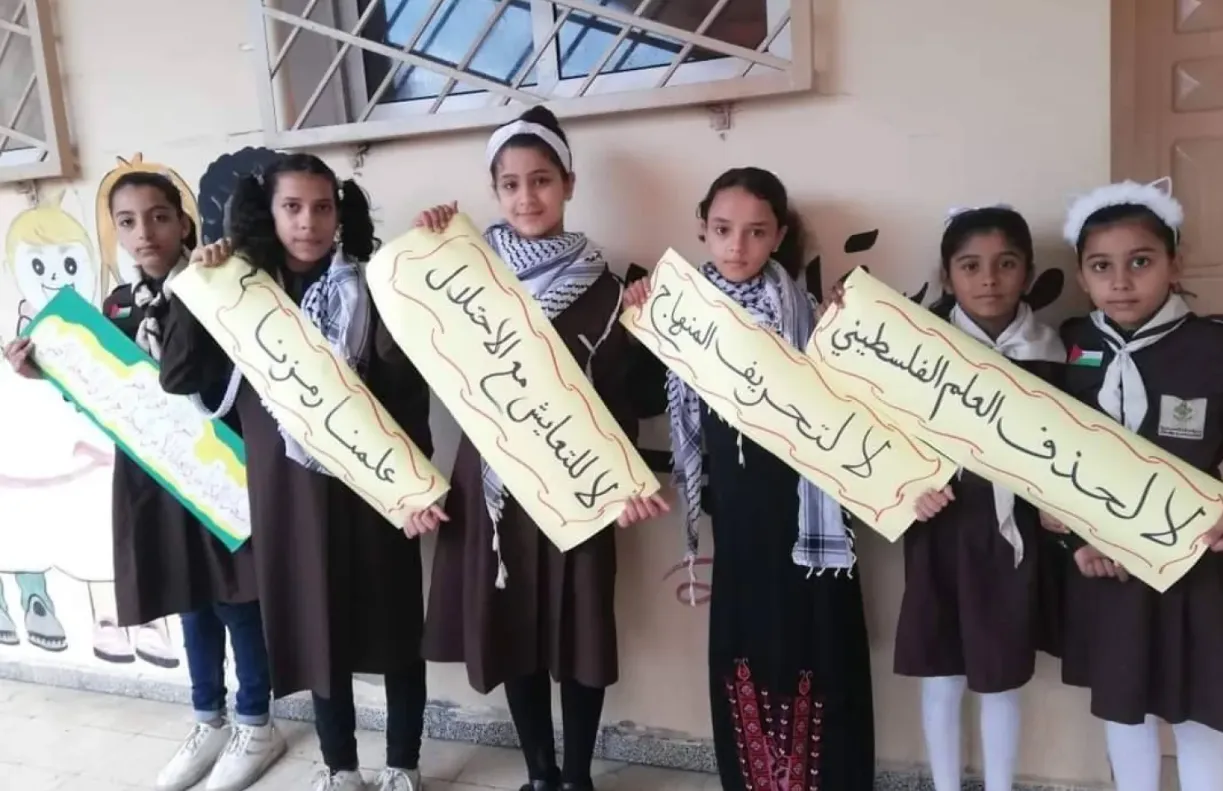
As the 2026-2027 school year got under way, Israeli pressure on Palestinian education in occupied Jerusalem intensified, with measures targeting curricula, schools and teachers, amid warnings from Jerusalemites of attempts to reshape the education process and erase the Palestinian identity and narrative among thousands of students.
According to figures from the Jerusalem Governorate, Israeli authorities have begun imposing the Israeli curriculum, or a distorted version of the Palestinian curriculum, on more than 45,000 first- and seventh-grade students in schools run by the occupation's municipality, a step the governorate says targets the Palestinian identity and national narrative of Jerusalem's students.
The measures are not limited to the curriculum: Palestinian schools face mounting pressure through funding, licensing and inspections. Writer and journalist Rasem Obeidat reported that schools teaching the Palestinian curriculum have been denied funding and renovation and threatened with the withdrawal of their licences, while schools including Al-Ibrahimiya and Al-Iman schools were inspected in a search for Palestinian books and curricula.
The measures have extended to the students themselves, with searches of their bags recorded, while some schools were granted temporary licences on the grounds that they needed to "correct" their educational status.
At the same time, restrictions on teachers coming from the West Bank have tightened. Jerusalem schools are struggling to obtain or renew permits for their staff, even though a number of educational institutions depend on them, particularly for teaching science subjects.
The crisis has also hit Christian schools in Jerusalem, where teachers and staff living in the West Bank faced obstacles that prevented them from reaching their workplaces, prompting educational institutions to protest and strike.
The Higher Presidential Committee for Church Affairs in Palestine warned of the consequences of these restrictions and called on the world's churches to act to ensure that teaching staff can reach Christian schools, warning of the impact on thousands of students and on the regular running of the school year.
In another strand of pressure, Obeidat pointed to the closure of UNRWA's five schools in Jerusalem, including two in Shuafat camp, one in Wadi al-Joz, and two in Silwan and Sur Baher, describing it as part of a course aimed at reducing the presence of Palestinian education and of the UN Relief and Works Agency for Palestine Refugees in the city.
Jerusalem's schools have about 120,000 students, and according to the figures cited, the curriculum change affects more than 45,000 of them, or nearly 38% of the total, amid fears that Israeli measures will widen in the future.
Jerusalem specialists believe the battle goes beyond textbooks to the students' awareness and their narrative about their city, history and identity. Journalist Munir al-Ghoul, who specialises in Jerusalem affairs, said replacing the Palestinian curriculum with the Israeli one aims to change the Palestinian narrative geographically and historically and to influence students' awareness.
The successive measures show that the struggle over education in Jerusalem is no longer confined to the content of the textbook, but now extends to the school, its funding and licensing, and to the teacher and their ability to reach it, in an attempt to reshape the Palestinian education system in the city and impose an educational reality more closely tied to the Israeli system.