
Ankara Declaration affirms centrality of Palestine and calls for harnessing the power of the Muslim diaspora
The declaration stressed support for the territorial unity of the Palestinian territories in the Gaza Strip and the West Bank, including East Jerusalem, the protection of the Palestinian people and guaranteed access for humanitarian aid
Ankara – FiMED
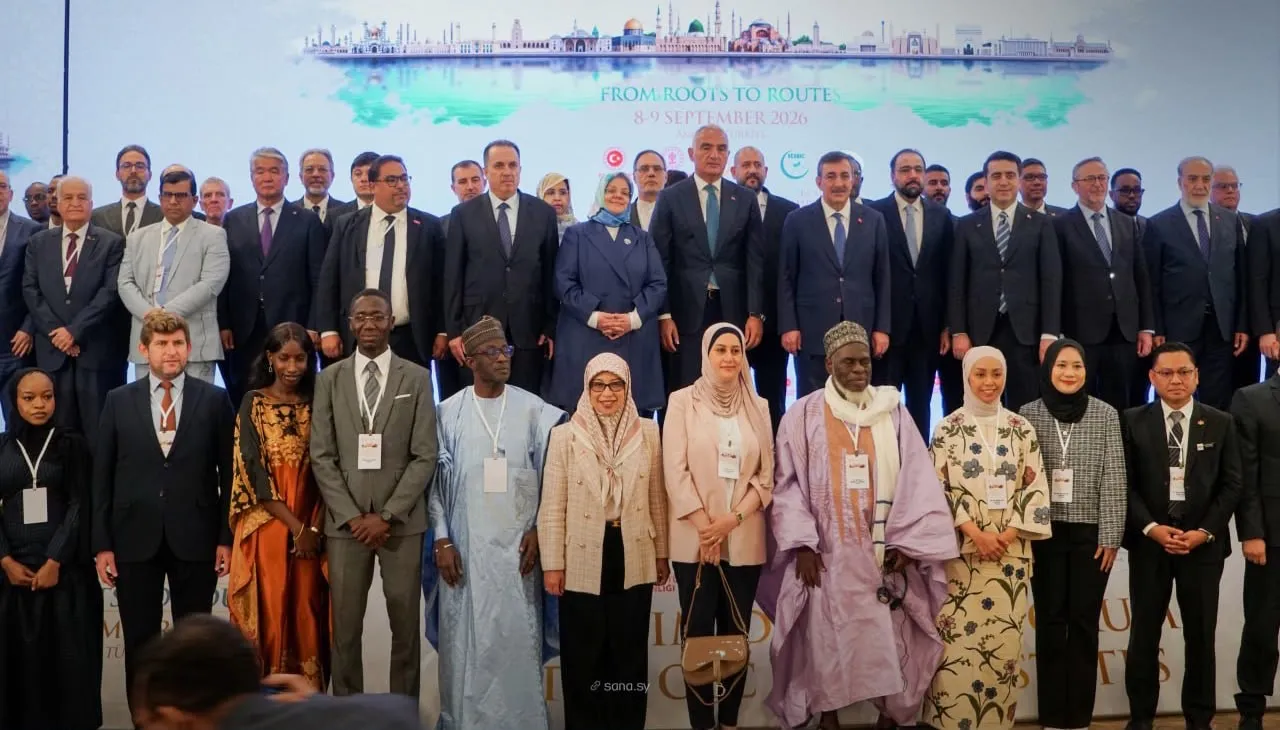
The first Muslim Diaspora Forum has concluded in the Turkish capital Ankara with representatives from 48 Muslim countries, affirming in the "Ankara Declaration" the centrality of the Palestinian cause and the inalienable rights of the Palestinian people, foremost among them the right to self-determination and to an independent, sovereign state on the 4 June 1967 borders with East Jerusalem as its capital.
The declaration stressed support for the territorial unity of the Palestinian territories in the Gaza Strip and the West Bank, including East Jerusalem, the protection of the Palestinian people and unhindered access for humanitarian aid to all the occupied Palestinian territories, reaffirming the Organisation of Islamic Cooperation's support for Palestinian rights.
During the forum, the head of the Palestinian delegation, Tayseer Jaradat, an adviser at the Palestine Liberation Organisation's Department of Expatriate Affairs, reviewed the consequences of the ongoing war on the Gaza Strip, as well as the Israeli escalation in the West Bank and Jerusalem and the accompanying violations of international law and international humanitarian law.
Jaradat said the stalled political process and the absence of a clear horizon for a solution call for a new political track leading to a just resolution of the Palestinian question, stressing that the continuation of the current situation offers no basis for addressing the conflict.
Palestine: the diaspora is an integral part of national identity
The head of the Palestinian delegation addressed the situation of the Palestinian diaspora spread around the world, stressing that most of it was formed by force as a result of what the Palestinian people have been through, and that the diaspora is an integral part of national identity and a core component of the Palestinian people.
Jaradat set out a Palestinian vision for developing the work of communities and the Muslim diaspora, based on moving from fragmentation to organisation and coordination, and on harnessing skills and resources and turning them into an effective and sustainable force.
He called for a permanent network of community and diaspora institutions in the member states of the Organisation of Islamic Cooperation, to allow efforts to be coordinated, expertise to be shared and communication between institutions and communities to be strengthened.
He also proposed a broad digital platform to mobilise Muslim talent in various fields, connect members of the diaspora with their countries of origin, and draw on their expertise in development and in keeping pace with modern changes.
Jaradat stressed the importance of investing in young Muslims and new generations and strengthening their bond with the identity of their countries of origin, in a way that preserves identity and enhances the diaspora's ability to contribute to its host societies and countries of origin.
The forum comes amid growing interest in the role of communities and the Muslim diaspora in political, humanitarian and development issues, with the Palestinian cause standing out as one of the issues enjoying the broadest consensus in the Muslim world.